Introduction
If you manage a commercial building and you are weighing up whether to move away from gas heating, you are probably getting two very different messages. One says heat pumps are the future and the switch is straightforward. The other says they are expensive, complicated, and not always worth it.
Both contain some truth. The honest answer is that switching from gas to a commercial heat pump is not the right decision for every building at every point in time. But for a growing number of commercial operators, it is the right decision right now, and understanding why requires looking at carbon rather than cost.
This guide is for building operators, Facilities Managers, and Estates Directors who are at the research stage. We will cover how commercial heat pumps work, when a gas to heat pump conversion makes sense, what the installation process involves, and what to expect from a contractor who knows what they are doing.
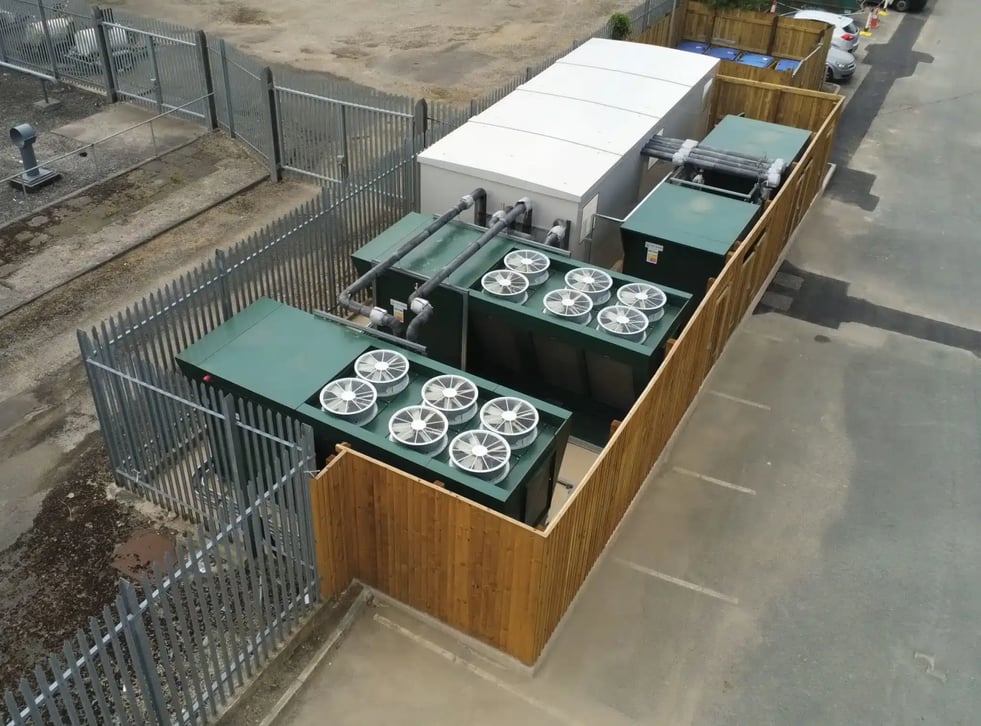
Image Copyright: Clade Engineering Systems
How a commercial air source heat pump works
An air source heat pump extracts heat from outdoor air and uses it to warm water, which then circulates through a building's heating and hot water system. It runs on electricity rather than gas, which is the source of its carbon reduction potential.
The efficiency of a heat pump is measured by its Coefficient of Performance, or COP. A COP of 3 means the system produces three units of heat for every one unit of electricity consumed. In practical terms, this means a well-specified commercial heat pump will deliver significantly more heat output than the energy it draws in. The exact COP depends on the system specification, the building's insulation, and the ambient outdoor temperature.
It is worth being direct about one thing here – the running cost calculation does not always favour the switch. Whether a heat pump reduces your energy bills depends on your building's current consumption, the efficiency of your existing gas system, your electricity tariff, and the building's insulation. You may want to verify current energy price comparisons with an independent energy advisor before making a financial case internally.
The carbon case is clearer. Gas combustion produces direct carbon emissions at point of use. Electricity generation in the UK grid has become progressively less carbon-intensive as the share of renewables has grown. A commercial building that switches from gas to an air source heat pump, particularly one paired with solar PV, can make a material reduction in its operational carbon footprint.
When switching from gas to a heat pump makes commercial sense
Not every building is a strong candidate for a heat pump conversion right now. Here are the conditions that tend to make a conversion viable.
Your existing system is reaching end of life
If you are facing a boiler replacement in the next two to three years, that decision point is the right time to evaluate whether a like-for-like replacement makes sense or whether the capital investment would be better directed toward a lower-carbon alternative.
Your organisation has carbon reduction targets
If your business has net-zero targets, scope 1 and 2 reporting obligations, or supply chain sustainability requirements from clients such as those in defence, aerospace, or public-sector procurement, moving away from gas heating is one of the most direct levers available to you.
Your building has reasonable insulation
Heat pumps operate most efficiently when the building envelope retains heat well. Poorly insulated buildings with high heat loss can reduce system efficiency and increase running costs. A pre-conversion assessment will identify whether insulation improvements should be part of the project scope.
You are operating in a sector with sustainability scrutiny
Leisure centres, universities, public sector buildings, and organisations with B Corp or similar certifications are facing increasing pressure to reduce their operational carbon emissions. Two projects UES delivered, one at Hawthorn Leisure Centre and one at UWE Bristol, both sit in this category and reflect a broader shift in how these organisations are being held accountable for their estates.
What the installation process involves
A commercial heat pump installation is not a simple swap. It requires careful planning, coordination with other building systems, and sequencing that minimises disruption to a live operation. Here is what a well-managed installation typically involves.
Site assessment and system design
Before any work begins, a thorough assessment of the existing heating system, building fabric, and hot water demand is needed. The new system needs to be correctly specified for the building's actual requirements, not just sized by rule of thumb.
Plant room reconfiguration
In most commercial conversions, the existing plant room layout needs to be adapted to accommodate the new system. At Hawthorn Leisure Centre, this involved reconfiguring areas within the plant room before new pipework and connections could be installed. This stage requires experienced coordination between the installing contractor and other trades on site.
Integration with existing infrastructure
The heat pump needs to connect cleanly with existing pipework, controls, and electrical supply. At UWE Bristol, UES removed existing gas-fired calorifiers and integrated the new air source heat pump system with the building's hot-water distribution system. The sequencing of that work in a live university environment, where disruption had to be minimised, required careful planning rather than just technical competence.
Testing and commission
Once installed, the system needs to be tested and commissioned properly to confirm it is operating at its designed efficiency. This stage is where shortcuts taken earlier in the process tend to surface as problems.
Ongoing maintenance
Commercial heat pumps require planned maintenance to sustain performance over time. When appointing a contractor, it is worth confirming whether they will also service what they install. A contractor who installs and maintains the system has a direct stake in getting the specification right from the start.
What to look for in a contractor
The market for commercial heat pump installation has grown quickly, and not every contractor operating in it has the depth of experience required for the work. When evaluating contractors for a gas to heat pump conversion, the following questions are worth asking.
Are they MCS accredited? MCS accreditation is the recognised standard for renewable energy installation in the UK. It is a baseline requirement, not a differentiator, but its absence is a red flag.
Do they have experience specifically with commercial installations? Domestic heat pump installation and commercial installation are not the same thing. System sizing, plant room integration, hot water demand profiles, and compliance requirements differ at the commercial scale. Ask to see relevant case studies.
Can they manage the full scope? A conversion project will typically involve mechanical, electrical, and possibly structural elements. A contractor who can manage all of those in-house removes coordination risk and gives you a single point of accountability throughout.
Will they maintain what they install? As above. This question tells you a great deal about how confident a contractor is in their own specification.
Two examples from UES
Hawthorn Leisure Centre
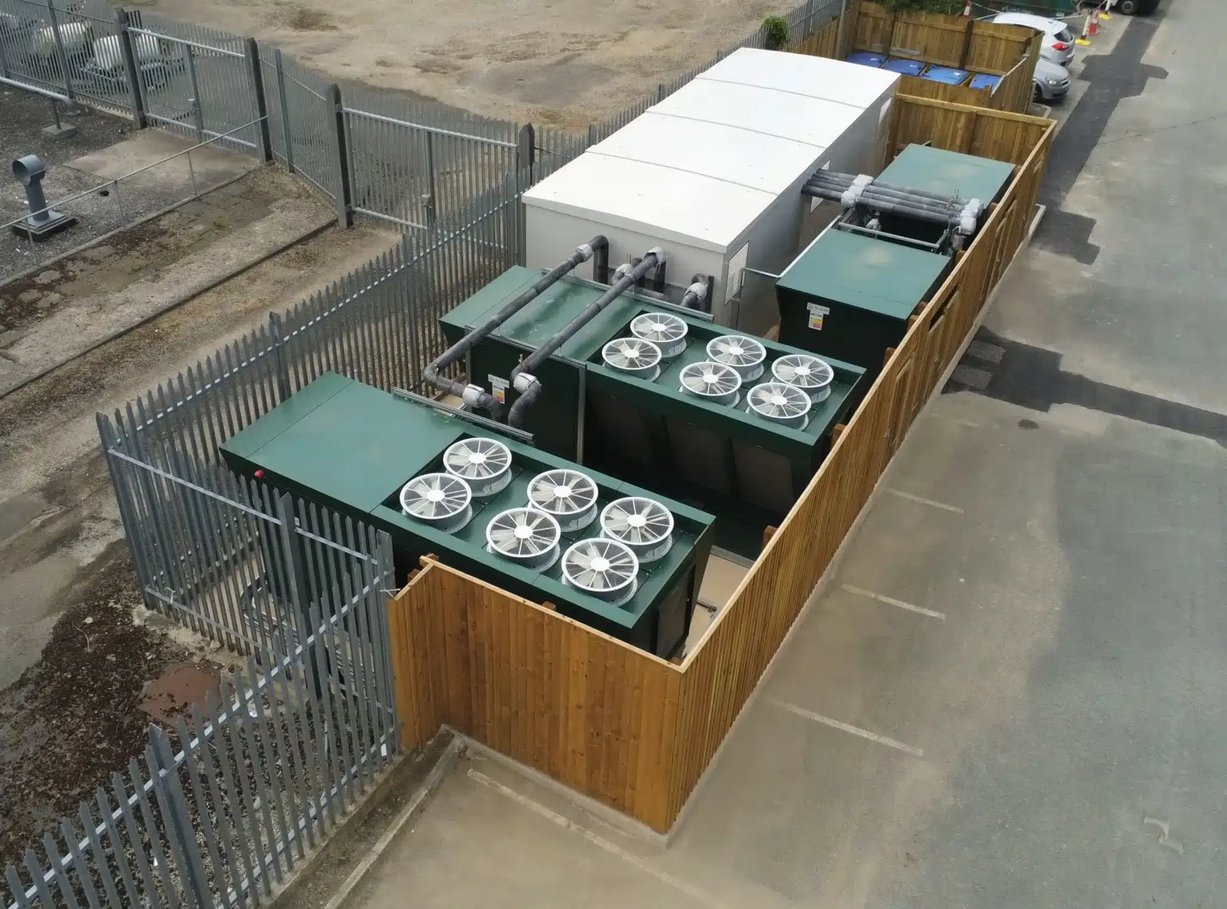
Working alongside Clade Engineering Systems, UES delivered a large commercial air source heat pump installation to serve the swimming pool and wider leisure facilities. The project required multi-contractor coordination, staged delivery, and plant room reconfiguration. The new system replaced a traditional gas-based heating approach, supporting the centre's long-term sustainability objectives.
UWE Bristol
UES installed an air source heat pump to serve gym shower facilities as part of the university's low-carbon student accommodation development. The existing gas-fed calorifiers were removed, and the new system was integrated with minimal disruption to a live campus environment. The project forms part of UWE's broader programme to reduce carbon emissions across its estate.Both projects were delivered by the same team that will plan, install, and maintain your system.
Is now the right time for your building?
That depends on where your gas system is in its lifecycle, what your organisation's carbon commitments look like, and what your building's fabric condition allows. If you are at the early research stage, the most useful next step is a conversation with an engineer who can look at your building and give you an honest assessment, rather than a sales pitch for heat pumps regardless of suitability.
That is how UES approaches it. If gas replacement is not the right answer for your building right now, we will tell you. If it is, we will specify it properly, install it to the standard the building requires, and maintain it for the long term.
Get in touch to arrange a no-cost initial assessment.