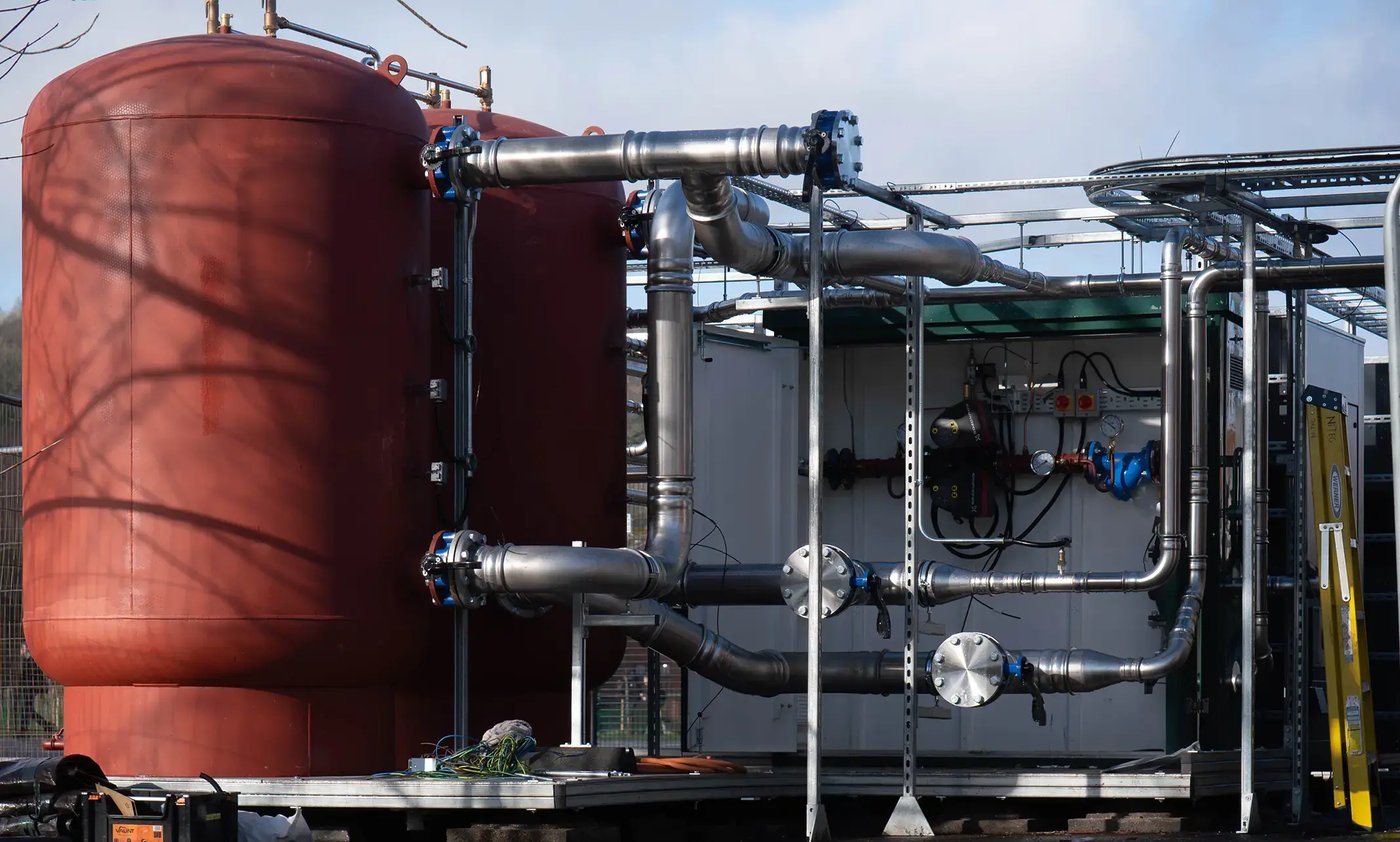
Most businesses treat a fit-out like a finishes project. New layout, new lighting, a refresh that makes the space feel current again. That is a reasonable way to think about it, until you realise what you have just walked past.
When ceilings are down, risers are open, and plant areas are being touched, you have access to a building that you will not get again without paying for the disruption separately. That window is where the most valuable sustainability decisions live. Not because you can bolt on impressive technology, but because you can put the right infrastructure in place while it is easiest, cheapest, and least disruptive to do so.
Miss it, and you will spend years working around a building that was never quite set up properly.
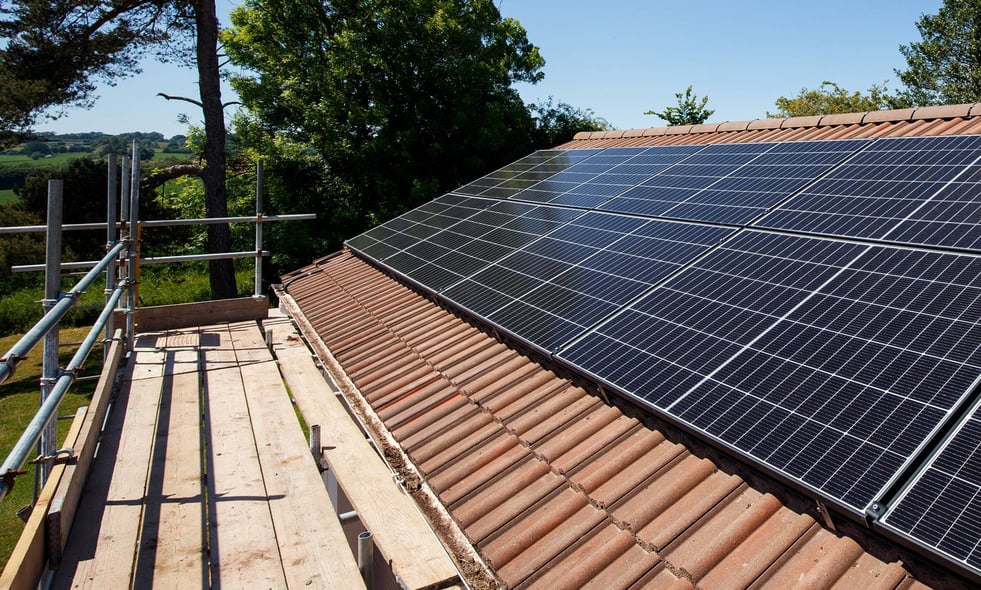
Controls first. Everything else follows
Most buildings waste energy for a simple reason. Systems run when they do not need to, in areas no one is using, under conditions that have nothing to do with what is actually happening in the space.
During a fit-out, you have a genuine opportunity to zone properly. That means aligning HVAC zones with how the space will actually operate day to day. Meeting rooms behave differently from open plan. Breakout spaces peak at different times. Storage areas do not need the same conditions as client-facing floors.
If you do not get zoning right during the fit-out, you will spend the next five years adjusting setpoints and working around a system that was never configured for the building it is actually in. The controls upgrade is rarely the exciting conversation. It is usually the one that determines whether all the other upgrades perform as promised.
Lighting is the most straightforward return on investment in most fit-outs
LED upgrades combined with the right controls, presence detection, daylight dimming, and basic scheduling consistently deliver strong payback in commercial environments. You may want to verify specific payback periods for your building type with an energy assessor, as they vary by site. But the principle is well established.
What changes during a fit-out is not just the technology available to you. It is the ability to properly design lighting for the new layout. Repositioning fittings to match desk arrangements, circulation routes, and use zones. Installing containment and controls while ceilings are open rather than chasing them through a finished space later.
You can upgrade to LED after a fit-out. You cannot redesign the lighting strategy without reopening the ceiling.
If you cannot measure it, you cannot manage it
A lot of sustainability claims fall apart for one reason. No one can prove the savings.
Sub-metering and basic monitoring are straightforward to install when distribution boards are accessible and new circuits are being run. Separating loads, making energy visible by zone, being able to see lighting, HVAC, and high-use areas independently – that is what turns a sustainability upgrade into something you can actually manage and report against.
Without it, you are relying on estimates. You cannot spot drift. You cannot identify systems running outside of hours. You cannot demonstrate performance to stakeholders or insurers with any confidence.
Adding metering after a fit-out means disrupting finished spaces. It becomes a standalone project with its own cost and its own programme. Most clients decide it can wait. It usually waits indefinitely.
.jpg?width=981&height=654&name=Larkmead%20Plant%20Room%20(2%20of%205).jpg)
Ventilation is where the hidden problems tend to sit
Indoor air quality is a growing part of sustainability conversations, particularly in offices, education, and public-facing buildings. But beyond compliance, there is a practical issue that regularly arises with fit-outs.
When layout and occupancy change, ventilation requirements change too. You cannot assume the existing system still matches the building's current use. Demand control ventilation, upgraded filtration, and heat recovery all become practical options when you have access to ductwork routes, ceiling voids, and plant interfaces.
Retrofitting ventilation upgrades into a finished space is slow, expensive, and disruptive. More often than not, the conversation gets deferred until there is a problem. By then, the options are narrower, and the costs are higher.
Heat pump readiness is a decision you make years before installation
Most commercial buildings are not ready for a heat pump today. That is not the point.
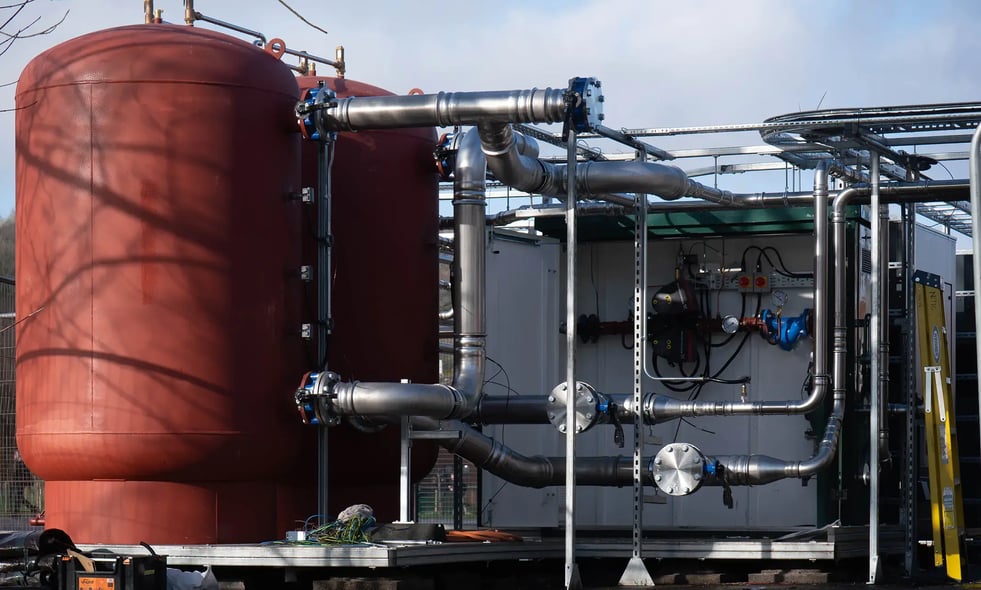
The point is that the buildings which make a successful transition to lower-carbon heating in the future are almost always the ones where someone thought about it earlier. That might mean checking whether distribution temperatures are compatible, identifying pipework that needs upgrading, leaving adequate plant space, or improving controls so the system can handle future changes.
A fit-out is one of the few moments where those enabling upgrades sit naturally within the programme and the budget. Treating them as a standalone project later means paying for disruption twice.
The electrical strategy should lead, not follow
Solar PV and battery storage can be highly effective on the right sites, but they do not exist in isolation from the rest of the building's electrical infrastructure.
You need to understand incoming capacity, distribution constraints, where switchgear upgrades might be needed, and how the building's power use varies throughout the day before committing to a design. Fit-outs routinely include electrical upgrades. That makes them the logical moment to assess PV and battery readiness, plan for EV charging, and size the electrical strategy for where the business is heading, not just where it is today.
Leaving those decisions until a later project usually means either compromising on what is possible or funding expensive rework.
The approach that works: phase it properly
Not every client wants to tackle everything at once, and they shouldn’t have to. But there is a difference between a phased plan and a deferred decision.
A phased plan looks roughly like this. During the fit-out: controls, zoning, lighting, metering, and infrastructure readiness. That is the foundation. In the following one to two years: ventilation optimisation, heat recovery, and efficiency upgrades once the building is operating and real data is available. Further out: solar PV, battery storage, electrification, and EV charging as loads, budgets, and policy direction allow.
The reason Phase 1 matters is that it makes every subsequent phase easier and cheaper. The buildings that do this well are not the ones that spent the most during the fit-out, but the ones that set the building up properly when they had the chance.
The window is shorter than it looks
Once procurement locks in and ceilings go back up, the conversation changes entirely. What was straightforward becomes disruptive. What was disruptive becomes a project in its own right.
If sustainability performance matters to your business, whether for cost, compliance, occupant wellbeing, or long-term asset value, the fit-out is not just a convenient moment to address it. For most commercial buildings, it is the best one you will get.